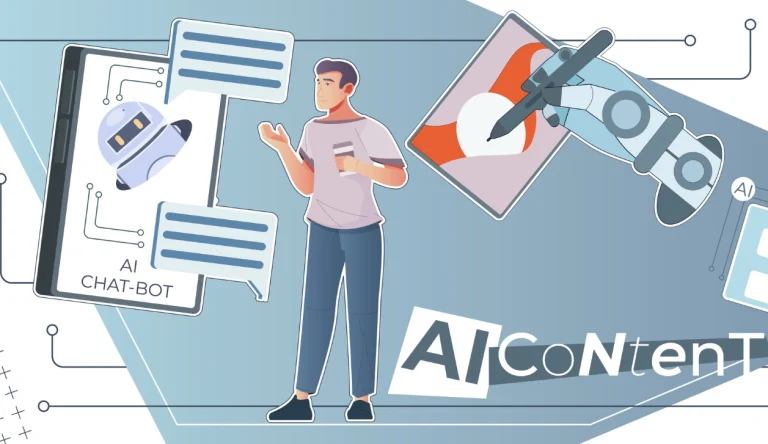
Creating content takes time. Businesses need blog posts, website copy, social media posts, emails, images, videos, and other marketing materials to stay visible online.
AI tools can make this process faster. They can help with ideas, writing, design, images, and content repurposing.
However, the best results do not come from letting AI do everything. Businesses should use these tools to support their marketing teams, while people provide the strategy, expertise, and final review.
This guide looks at some of the best AI content creation tools in 2026 and how businesses can use them to create useful content and generate leads.
What’s Included in This Article
This guide covers:
- AI-powered writing tools
- AI-powered visual content tools
- Ways to use AI-generated content
- How AI content can support lead generation
- What to consider when choosing AI tools
AI-Powered Writing Tools
AI writing tools can help businesses create and improve written content. They are useful for everything from blog posts and website copy to email campaigns and social media content.
How to Use AI-Generated Written Content
AI-generated text can support different stages of your content process.
You can use AI to:
- Brainstorm blog topics
- Create content outlines
- Draft articles
- Write social media captions
- Create email ideas
- Rewrite existing content
- Improve readability
- Create headlines and titles
- Repurpose long-form content
For example, a business could turn a detailed blog post into several social media posts, an email newsletter, and a short FAQ. The key is to treat AI output as a starting point, not the finished product. Add your own expertise, examples, facts, and brand voice before publishing.
Top AI-Powered Writing Tools
ChatGPT can help with brainstorming, drafting, rewriting, editing, research, and content planning. It can also adapt content for different audiences and formats. OpenAI recommends using a simple workflow of planning, drafting, revising, and packaging content for its intended channel.
Claude is useful for drafting, rewriting, summarising, and working with longer pieces of information. It can be useful when a business needs help reviewing or organising large amounts of written material.
Gemini can support writing, brainstorming, summarising, and other content tasks. It can be particularly useful for businesses already working heavily within Google’s ecosystem.
Jasper is designed around business and marketing content. It can help teams create content while keeping messaging more consistent across different marketing channels.
You do not need all of these tools. Start with one that matches your workflow and learn how to use it well.
AI-Powered Visual Content Tools
Visual content is an important part of digital marketing. Images, graphics, videos, and other visual assets can make websites and social media posts more engaging.
AI has made it easier for businesses to create visual concepts without starting every design from scratch.
How Can I Use AI-Generated Visual Content?
Businesses can use AI to create:
- Social media graphics
- Blog images
- Ad concepts
- Product visuals
- Presentation graphics
- Backgrounds
- Illustrations
- Short video concepts
- Marketing designs
AI can also help edit existing images. For example, you may want to remove an object, change a background, create a new variation, or adapt an image for another format.
ChatGPT’s current image tools can generate and edit images from natural-language instructions, allowing users to create variations and refine designs through simple prompts.
AI-generated visuals should still match your brand. Check colours, typography, logos, messaging, and overall style before using them in marketing.
Top AI-Powered Visual Content Tools
Canva is a popular choice for businesses that need to create social media graphics, presentations, marketing materials, and other designs. Its Magic Studio brings AI features into the Canva design workflow, helping users generate and edit content more quickly.
Adobe Firefly supports AI-assisted image, video, audio, and design creation. It can be used for generating and editing creative assets and is useful for businesses already working with Adobe’s creative tools.
ChatGPT Images can also generate original images from text prompts and edit existing images. This makes it useful when a business needs quick concepts, illustrations, marketing visuals, or image variations.
Midjourney is known for creating detailed AI-generated images from text prompts. It can be useful for creative concepts, campaign ideas, illustrations, and visual inspiration.
Runway focuses heavily on AI-powered video creation and editing. It can help businesses explore video concepts and create visual content for digital campaigns.
The right tool depends on the type of content you need. A small business creating social posts may need a different tool from a company producing professional video campaigns.
How to Use AI-Generated Content to Create Value
AI tools can save time, but creating content should not be the final goal. Your content should help your business achieve something.
How to Use AI-Generated Text to Generate Leads
Written content can help attract potential customers through search engines, social media, email, and your website.
For example, you could use AI to help create:
- Helpful blog articles
- Service page drafts
- FAQs
- Downloadable guides
- Email campaigns
- Social media posts
- Landing page content
The important part is connecting the content to a customer need.
A blog can answer a common question and then direct readers to a related service. An email can provide useful information and invite readers to book a consultation. A guide can offer valuable information in exchange for contact details.
AI can help create the content faster, but your marketing strategy should decide what to create, who it is for, and what action the reader should take.
How to Use AI-Generated Visual Content to Generate Leads
Visual content can also support lead generation. For example, businesses can use AI-assisted visuals for:
- Social media campaigns
- Paid advertising
- Website banners
- Lead magnets
- Infographics
- Product demonstrations
- Educational graphics
A useful infographic can attract attention on social media and send visitors to a related blog or landing page. An AI-generated image can also help an advertising campaign test different creative ideas before investing in a final design. The visual should always support the message. Attractive content alone does not generate leads if there is no clear reason for the viewer to take action.
Choosing the Right AI Content Tools
The best AI tool is not necessarily the one with the most features.
Before choosing a tool, consider:
Your content needs: Do you mainly need writing, images, video, or several types of content?
Ease of use: Your team should be able to learn and use the tool without unnecessary complexity.
Quality: Test the output before committing to a platform.
Brand consistency: Make sure the tool can support the tone and visual style of your business.
Cost: Look at both subscription fees and usage limits.
Workflow: Choose tools that fit naturally into the way your team already works.
Using two or three well-chosen tools is often more useful than paying for many platforms that your team rarely uses.
Conclusion
AI tools have made content creation faster and more accessible in 2026. Businesses can use them to create written content, images, videos, social posts, emails, and other marketing materials.
But AI should support your strategy, not replace it. The strongest results come from combining AI with human creativity, business knowledge, editing, and quality control. Choose tools that solve real problems and use them to create content that provides value to your audience.
For businesses, the goal should not simply be to create more content. It should be to create better content that attracts the right people and encourages them to take action.
Key Takeaways
- AI can make content creation faster and more efficient.
- Use AI writing tools for ideas, drafts, editing, and repurposing.
- Use AI visual tools for images, graphics, designs, and video concepts.
- Treat AI-generated content as a draft that needs human review.
- Add your expertise and brand voice to AI-generated content.
- Connect every piece of content to a clear marketing goal.
- Use useful content to attract, educate, and convert potential customers.
- Choose AI tools based on your business needs rather than the number of features.
- A small number of well-chosen tools can be more useful than a large collection.