Why Structure Builds Trust Instantly
Medical websites are not brochures, and they are not typical marketing tools.
They are often the first point of contact between a patient and a clinic, long before a phone call or appointment.
Patients arrive with uncertainty, concern, and limited attention. In that moment, the way information is presented matters just as much as what is being said. Clear, accurate, and well-structured medical content signals professionalism, care, and competence. Poorly organised content, on the other hand, creates doubt before trust has a chance to form.
Before a patient ever meets your team, your content speaks for you.
Key points
- Patients scan medical websites under stress and uncertainty
- Clear structure builds trust faster than persuasive language
- Disorganised content creates confusion and hesitation
- Structured medical content supports both patients and clinic staff
- SEO and scalability improve naturally when content is well organised
Looking to build an exceptional website for your practice? – click here to learn more.

How Patients Actually Read Medical Websites
Most patients do not read medical websites line by line. They scan.
They are looking for reassurance and answers to very specific questions:
- Do you treat my condition?
- Who will be responsible for my care?
- Are you experienced and credible?
- How do I take the next step?
When information is buried, inconsistent, or difficult to understand, patients experience friction. That friction often shows up as hesitation, confusion, or the decision to leave and look elsewhere. Clear structure reduces mental effort and allows patients to feel confident more quickly.
In healthcare, clarity is not just a usability benefit — it is part of the patient experience.
The Risks of Poorly Structured Medical Content
When medical content lacks structure, the impact goes beyond aesthetics.
Common issues include:
- Vague or overlapping service descriptions that confuse patients
- Doctor profiles that are inconsistent or difficult to find
- Important information scattered across multiple pages
- Patients calling reception to clarify basic details
- Search engines struggling to understand your areas of expertise
Over time, these issues can unintentionally undermine a clinic’s perceived professionalism. Even highly qualified practices may appear less credible simply because their content does not reflect the quality of care they provide.
What “Accurate & Organised Medical Content” Really Means
Accurate, organised medical content is not just about writing better text.
It is about information architecture — how content is structured, connected, and presented.
In practice, this means:
- Clear service hierarchies
Primary services are clearly defined, with related sub-services and conditions logically grouped. - Consistent doctor profiles
Each clinician is presented with clear roles, specialties, credentials, and experience. - Patient-friendly language
Medical accuracy is preserved, but explanations are written in accessible terms. - Logical relationships between content
Services connect to doctors, conditions, and next steps in a predictable way.
This structure allows patients to move naturally through the website without feeling lost or overwhelmed.

How We Structure Medical Content in Practice
When structuring medical content, we begin with two perspectives: the patient’s intent and the clinic’s workflow.
We look at:
- What patients are searching for
- How they navigate information when anxious or time-pressed
- What clinics need to communicate clearly and responsibly
From there, we create consistent content patterns for:
- Service pages
- Doctor profiles
- Condition or treatment explanations
Each content type follows a predictable layout, terminology, and navigation logic. This consistency helps patients quickly understand where they are, what they are reading, and what to do next.
Good structure reduces questions before they are ever asked.
The Operational Benefits for Clinics and Staff
Well-organised medical content does not only benefit patients. It also supports clinic operations.
Clinics often experience:
- Fewer repetitive phone calls
- Clearer patient expectations before appointments
- Better alignment between front desk staff and website information
- Easier updates as services or teams evolve
- Reduced risk of outdated or conflicting information
In this way, structured content becomes an operational asset, not just a communication tool.
The SEO and Long-Term Value Side Effect
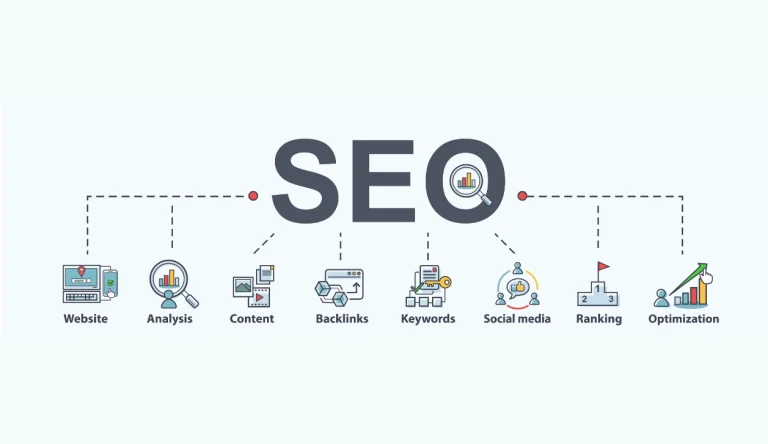
Search engines reward clarity.
When services, specialties, and clinicians are clearly defined and logically connected, search engines can better understand a clinic’s expertise. This improves visibility for relevant searches without relying on artificial optimisation tactics.
Just as importantly, a well-structured foundation allows websites to grow. New services, locations, or doctors can be added without breaking the overall system or requiring a full rebuild.
SEO becomes a by-product of clarity, not the driving force.
Use Content That Reflects Your Standard of Care
In healthcare, details matter.
The way information is organised reflects how a clinic thinks, communicates, and cares. Accurate, well-structured content sets expectations long before a patient walks through the door. It reassures patients that they are dealing with a practice that values clarity, responsibility, and professionalism.
When medical content is structured with care, patients feel it immediately.